An Organizer's Guide to AI

This guide is for everyone. But everyone should be an organizer.

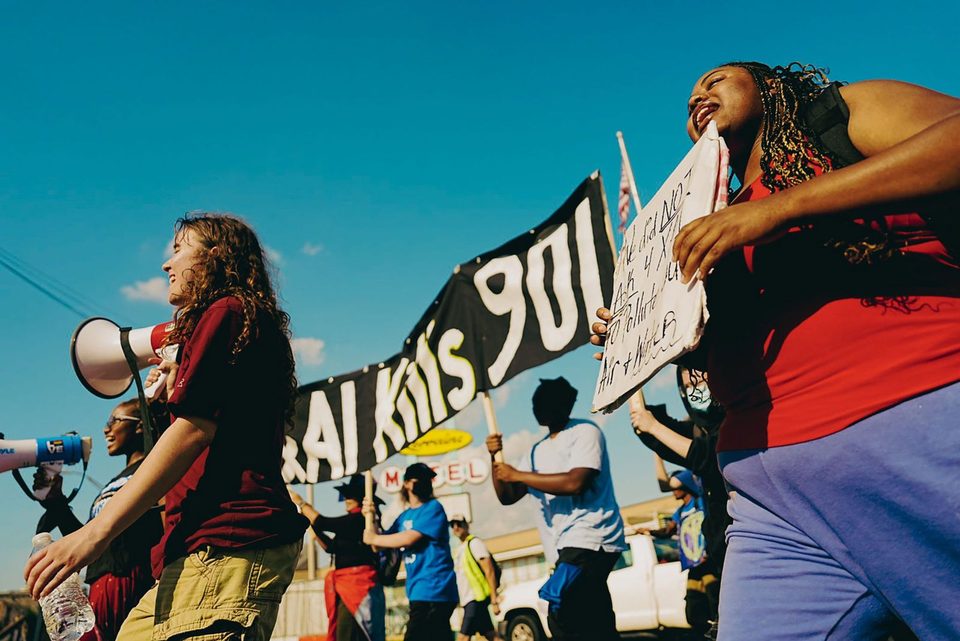
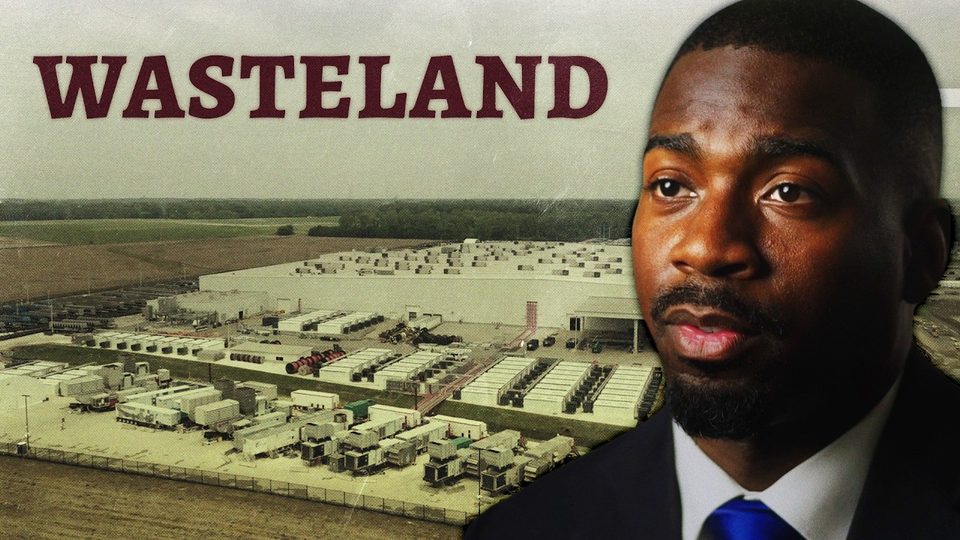
Data centers are the grassroots fight of this year, and the people are winning. But we should also ask:

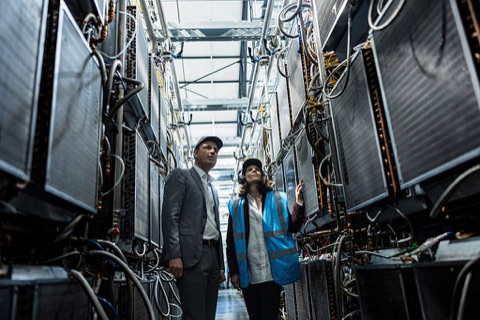
  • What are the data centers for?
  • What is the AI running in them doing?
  • Why are the billionaires and fascists so determined to build them?

This guide answers them with the sharpest, most concise analyses of AI by experts on labor, surveillance, ICE, war, and who owns the machine.

Written by a community and union organizer, a former TA of Stanford's flagship machine learning course (CS 229, with Andrew Ng), advised by MacArthur genius Dan Jurafsky. It draws on Stanford's NLP ethics seminar, CS 384, and goes wider. Thanks to Jurafsky, Ria Kalluri and Peter Henderson.

AI harms are not in the future. They are here now:

  • a few companies taking most of the money and power
  • workers, migrants, and anyone with a face being watched
  • software that cuts pay and makes jobs worse
  • unfair treatment in hiring, policing, and loans

The question that matters most is who controls AI, and what they use it for. An AI that does whatever a billionaire says is already here. It is under human control, and it is still not safe for the rest of us.

We have been here before

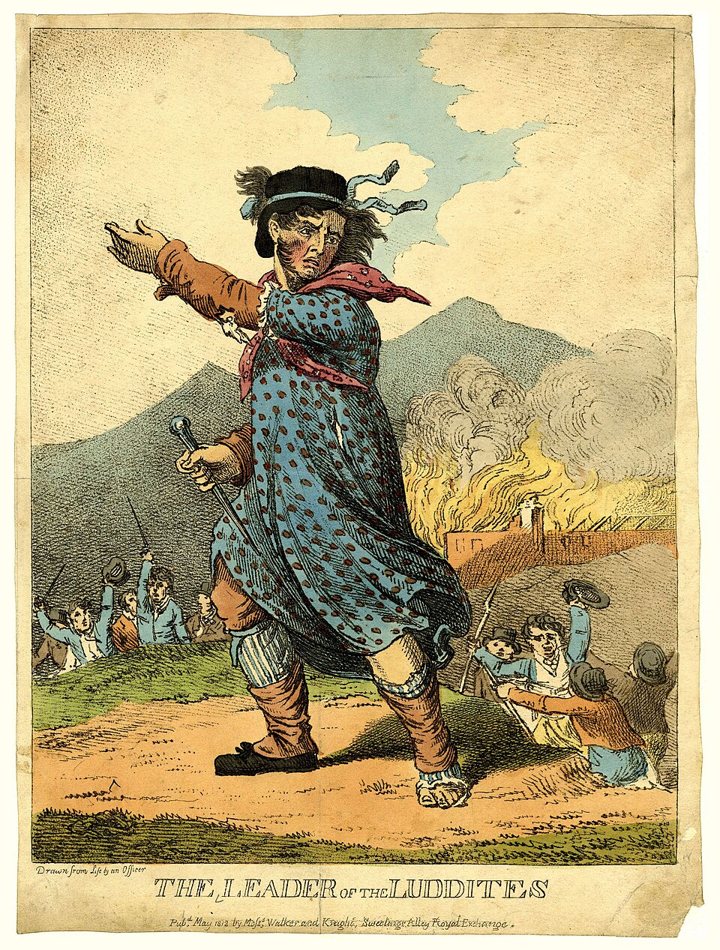
There is nothing new about AI. It is a machine owned by a few, built from the work of many, and used to pay them less. The left has been fighting the unequal results of automation under capitalism since the Luddites and mechanized clothing production.

  • We are not against automation that means less suffering and more humanity. We are against automation at our expense.
  • We do not need to fear AI. We need to understand it, as a force in society more than as engineering. To ignore its accelerating existence is not acceptable.
  • So we study it, and then we fight. The goal is material analysis, who gains and who pays, and then action: read, discuss, organize.
Hand-coloured 1812 print of a Luddite leader in a dress, pointing, with a mill burning behind him

"Misery generates hate. These sufferers hated the machines which they believed took their bread from them; they hated the buildings which contained those machines; they hated the manufacturers who owned those buildings."

The Leader of the Luddites, print, May 1812. Public domain, via Wikimedia Commons.

Charlotte Brontë, Shirley (1849), chapter 2, on the machine-breakers of 1812.

Quick picks

Start with: Hao's idea of AI colonialism ties this guide together, and the dockworkers at the Port of Los Angeles show what fighting back looks like.

Theory

AI Colonialism series. Video

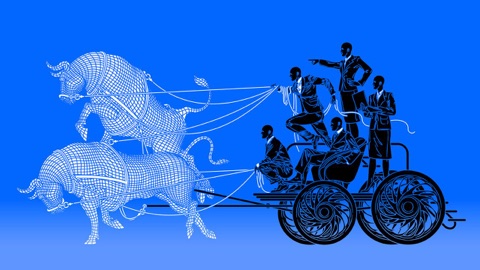
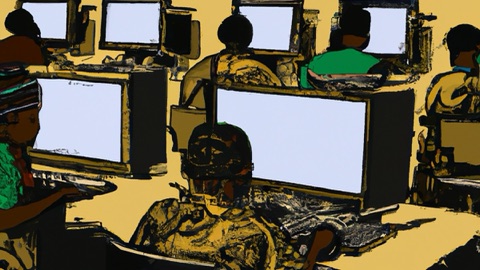
Like the old empires, AI makes a powerful few richer by taking data, labor, land, and water from communities that were robbed before, and calls it progress. Hao's series shows the pattern in four places: private surveillance building a "digital apartheid" in South Africa, data workers exploited through Venezuela's economic crisis, Gojek drivers in Jakarta fighting the algorithm, and a Māori couple in New Zealand building AI for their own people. It ends in resistance, not despair.

Karen Hao, author of Empire of AI · 10 min

Illustration: Edel Rodriguez for MIT Technology Review

Practice
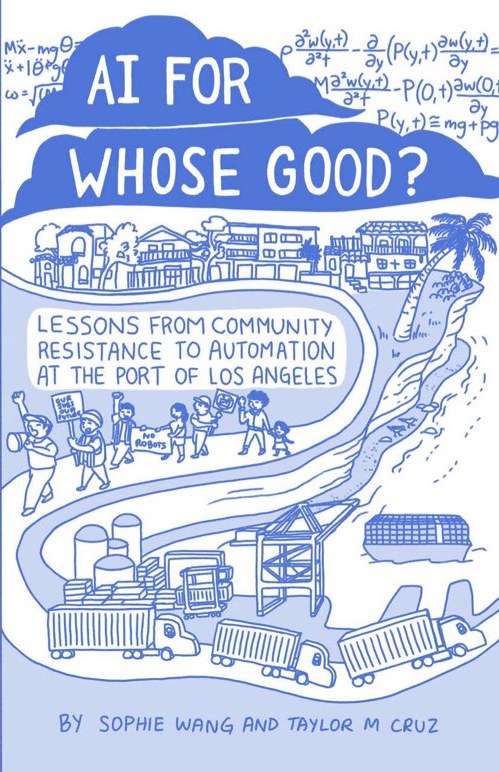
Cover of the zine AI For Whose Good? Lessons from community resistance to automation at the Port of Los Angeles
The story: a port community against automation
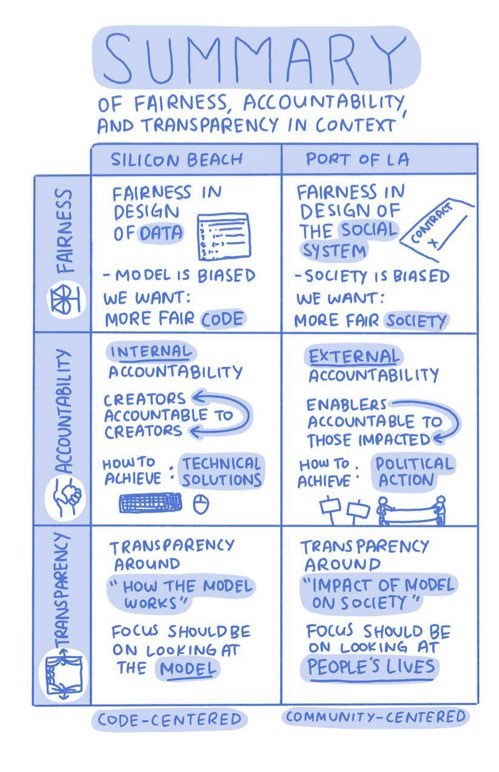
Zine page: a hand-drawn table comparing code-centered and community-centered fairness, accountability and transparency
The analysis: fair code, or a fair society?
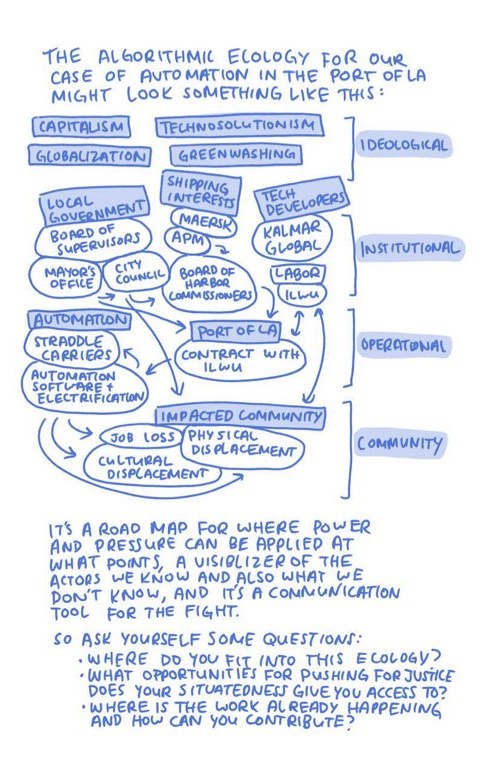
Zine page: the algorithmic ecology, a map of the ideas, institutions, machines and community around port automation
The tool: a map of where to apply pressure

AI For Whose Good? (zine)

Proof that automation can be fought where it lands. When the Port of Los Angeles moved to automate, ILWU dockworkers and their neighbors packed the hearings. Wang and Cruz were in the room, and the zine sets the workers' own words against one question: fair code, or a fair society? It also hands you a tool, the Algorithmic Ecology from the Stop LAPD Spying Coalition: a map of where to apply pressure. Hand-drawn, 24 pages, free to download and print.

Wang and Cruz · 10 min

Pages from AI For Whose Good? by Sophie Wang and Taylor M Cruz (2023), CC BY-NC-ND.

"Lavender" (+972). Video

An AI marked 37,000 Palestinians as bombing targets.

Yuval Abraham · War and genocide · 30 min

Image: +972 Magazine

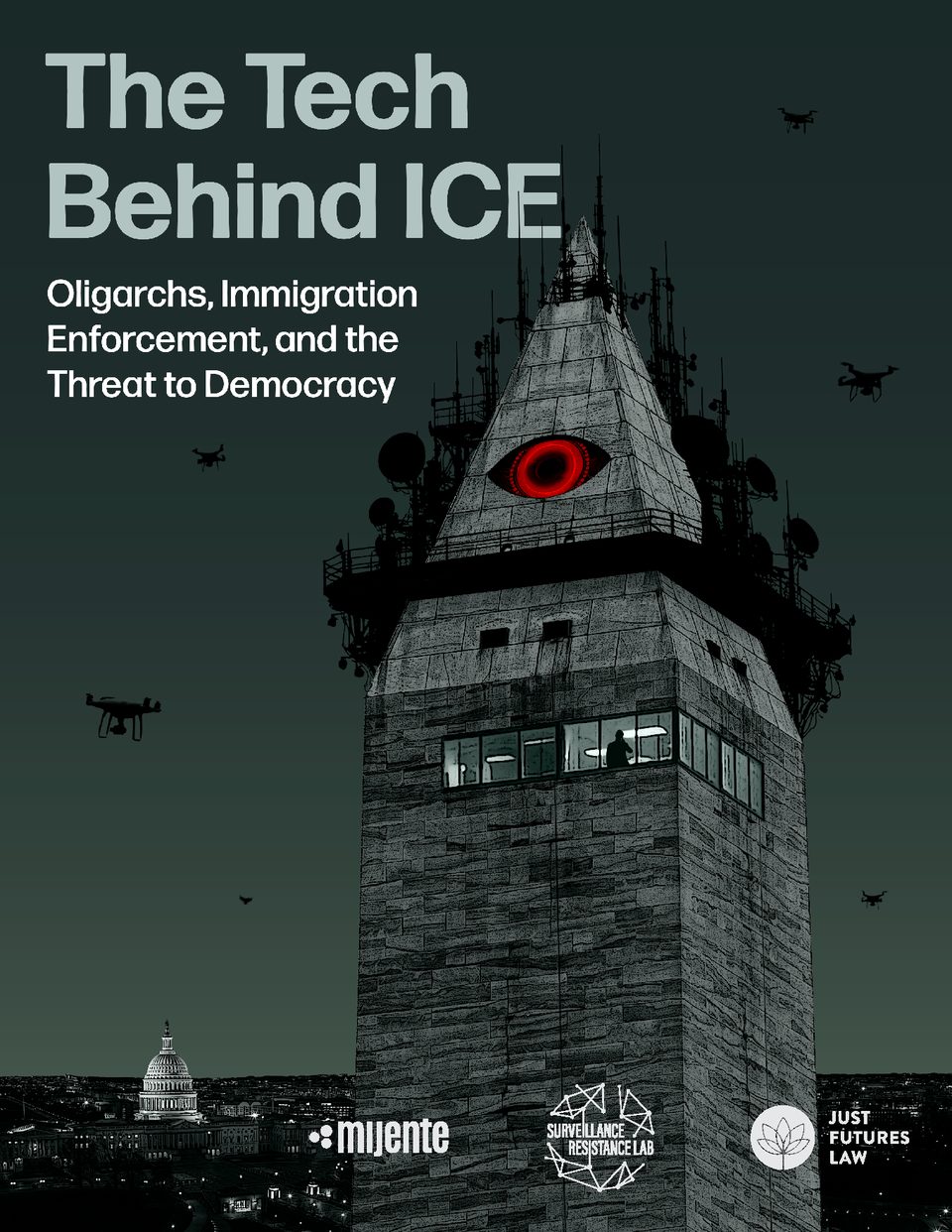
Tech Behind ICE report. Summary · Video

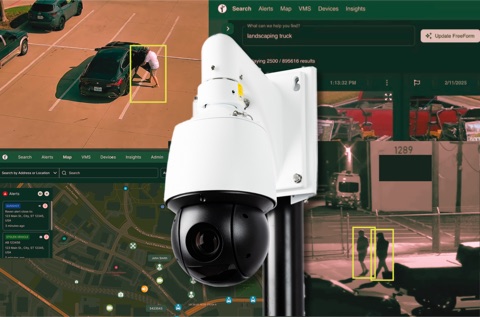
$513 million in surveillance tech for deportations. Palantir is the backbone.

Mijente · ICE and deportation · 10 min

Image: No Tech for ICE (Mijente, Surveillance Resistance Lab, Just Futures Law)

Book and podcast

Prefer video? Watch list

Where we stand

  • Technology is political, and the question is who owns it.

    • Machines are built by owners, for owners.
    • Losing control of AI is a real risk. It is one harm among many. The nearer danger is machines doing exactly what their owners want.
  • The harm is happening now, and it is not shared equally.

    • Biased face scans, unfair hiring software, and pay set by algorithm exist today.
    • Black people, women, queer people, migrants, and workers in poorer countries are hit hardest.
  • AI is a political problem.

    • The usual question is how to make the code more fair. The better question is how to make society more fair.
    • That takes political action, not technical fixes: unions, bans, privacy laws, breaking up monopolies, protests, people power, direct action
  • AI is made of people and their exploited labor.

    • Every AI model is built from your data without your consent, created with low-paid workers in the developing world
    • Treating AI as an a thinking entity or giving it human traits itself obscures the exploited human labor behind it

Who does the work and pays the costs

1Labor and Employment

The question is never the machine. It is who owns it, who it replaces, and who gets a say.

  • My favorite thing on this whole list is the zine AI For Whose Good?
  • Three AI fights: jobs lost, jobs made worse, and the hidden workers who build AI
  • The researchers: Veena Dubal named algorithmic wage discrimination after years with Uber and Lyft drivers. Milagros Miceli of DAIR leads the Data Workers' Inquiry, where data labelers study their own jobs; her colleague Adrienne Williams drove for Amazon.
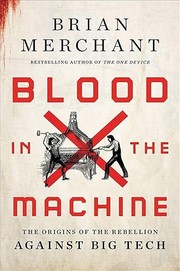
  • The organizers: Brian Merchant wrote Blood in the Machine (2023), the Luddites' story. Lorena Gonzalez, who wrote California's AB 5, now heads the state's union federation, the force behind the "No Robo Bosses" bills.

Quick picks

Cover of the zine AI For Whose Good?

AI For Whose Good? (zine, 2023)

Best of this section. ILWU dockworkers and their neighbors packed Port of Los Angeles hearings to stop terminal automation. Hand-drawn, 24 pages, free.

Sophie Wang and Taylor M. Cruz

Pages from AI For Whose Good? by Sophie Wang and Taylor M Cruz (2023), CC BY-NC-ND.

"Will A.I. Become the New McKinsey?" (The New Yorker, 2023)

A former McKinsey employee called the firm "capital's willing executioners": hired so bosses can cut jobs and dodge the blame. Chiang warns AI is being built to do the same work.

Ted Chiang, novelist

Image: The New Yorker

"The Problem With AI Is About Power, Not Technology" (Jacobin, 2024)

AI is "not leading to the abolition of human labor but rather its degradation." Employers use it, like every machine before it, to break skilled jobs into cheaper ones.

Jason Resnikoff, historian of automation

Image: jacobin.com

"Canaries in the Coal Mine?" (2025, updated August 2026)

Payroll data: workers aged 22 to 25 in the most AI-exposed jobs now trail their peers by about 19%. The old are automating the young.

Erik Brynjolfsson, Bharat Chandar, Ruyu Chen (Stanford)

Image: Stanford Digital Economy Lab

Articles, papers and projects21
  • The algorithm is the foreman. Dubal's drivers get different pay for the same ride, and describe it as gambling. The data workers who train AI are timed and scored by software. It is the same boss at both ends of AI's supply chain.
  • Bargaining power sets the pace of automation, not engineering. The Luddites broke machines to force employers to bargain (Hobsbawm). In 2024 East Coast dockworkers shut 36 ports for three days and came away with a wage deal, with automation still on the table. The ILWU demands a worker voice in how any new technology comes in.
  • Job loss is a policy choice. NAFTA cost about 700,000 US jobs with no robots involved, and let bosses win lower wages just by threatening to move the plant.
  • Read jobs numbers with care. Employment data is murky, and much of it comes from people with a stake in the answer: AI companies, banks, and consultancies. The careful studies so far agree on one thing. The young are hit first, and not by layoffs: they are just not getting hired.
  • What to demand. Exley: the same pay for half the hours, the way the 8-hour day was won. Varoufakis reads the Manifesto as the first argument over who owns the machines.
SubtopicRead thisByThe idea
Wages and gig work "On Algorithmic Wage Discrimination" (Columbia Law Review, 2023) Veena Dubal (UC Irvine law) "Algorithmic wage discrimination": apps use each driver's data to pay different rates for the same work. Drivers call it gambling. Dubal wants it banned outright, not regulated.
Data work "The Exploited Labor Behind Artificial Intelligence" (Noema, 2022); Data Workers' Inquiry Adrienne Williams, Milagros Miceli, Timnit Gebru The essay: talk of thinking machines hides the labelers, moderators, drivers, and warehouse workers AI depends on, and backing their organizing is the real ethics work. The Inquiry: data workers in Kenya, Venezuela, Syria, and Germany study their own jobs and publish reports, zines, and films.
Unions ILWU policy statement on AI ILWU, the West Coast dockworkers' union Opposes AI and automation used to surveil, discipline, and displace workers. Demands oversight, a worker voice in new technology, and regulation at every level of government.
Catholic social teaching Magnifica Humanitas (encyclical, 2026) Pope Leo XIV The pope's letter on AI, 135 years after Rerum Novarum, the Church's letter on factory workers. It says AI as built now can "de-skill workers, subject them to automated surveillance and relegate them to rigid and repetitive tasks," backs unions, and wants every rollout to come with "verifiable measures to protect the employment, retraining and participation of workers." Hand it to a Catholic coworker or a parish. Long: read paragraphs 1 to 16, then 148 to 156, about 20 minutes.
Dockworkers and automation "The Dockworkers' Strike Is a Big Test for Kamala Harris" (The New Republic, 2024); "Yes, the striking dockworkers were Luddites. And they won." (Blood in the Machine, 2024) The New Republic; Brian Merchant In October 2024, weeks before the election, 47,000 dockworkers shut 36 East and Gulf Coast ports over pay and port automation. Kamala Harris and Joe Biden backed the strikers instead of ordering them back to work. After three days they had a wage deal, and automation went back to the table.
The first industrial revolution "The Machine Breakers" (Past & Present, 1952) Eric Hobsbawm The Luddites were not against machines. Breaking them was "collective bargaining by riot": a tactic used when strikes were impossible, and it often worked.
The cotton gin Reading note on Blood in the Machine (A Working Library, 2023) Mandy Brown, on Brian Merchant's book The cotton gin was sold as labor-saving. It "worked so well that it wildly increased the demand for workers" to hoe and pick, and helped keep slavery alive another seventy years. Automation rarely means less work. Five minutes.
The first industrial revolution "Marx predicted our present crisis, and points the way out" (The Guardian Long Read, 2018) Yanis Varoufakis Reads the Communist Manifesto as a response to the first factories. It foresaw automation, globalization, and the fight over who owns the machines.
Jobs and trade "NAFTA's Impact on U.S. Workers" (Economic Policy Institute, 2013) Jeff Faux About 700,000 US jobs lost, mostly in manufacturing states like California, Texas, and Michigan.
Jobs data "Young workers' employment drops in occupations with high AI exposure" (2026) Federal Reserve Bank of Dallas Young people in AI-exposed jobs are not being laid off. They are not getting hired in the first place.
Jobs data "Generative AI as Seniority-Biased Technological Change" (2025) Seyed Mahdi Hosseini Maasoum and Guy Lichtinger Résumés of 62 million workers at 285,000 firms. At companies that adopt AI, junior jobs fall while senior jobs keep growing, because hiring slows.
Jobs data, from a company with a stake "Labor market impacts of AI: A new measure" (2026) Anthropic An AI company's own study finds no rise in unemployment among exposed workers so far. Read it knowing who wrote it.
Drivers "In San Francisco, Waymo Has Now Bested Lyft. Uber Is Next" (2025) Underscore_SF, using YipitData figures In about 20 months Waymo went from nothing to 27% of ride bookings inside its San Francisco zone, passing Lyft at 21%. Airport trips are not counted, a caveat The Driverless Digest walks through. Those are fares that used to go to drivers.
What to do about robotaxis New York lets Waymo's permit expire (Gizmodo, 2026); Alex Bores's "AI dividend" (Axios, 2026); Tom Steyer's jobs guarantee (Common Dreams, 2026) Gizmodo; Axios; Common Dreams Three answers in 2026. Stop it: Mayor Zohran Mamdani let Waymo's New York permit lapse. Tax it and pay people: a dividend funded by a tax on AI use and public stakes in AI firms. Guarantee a job: a public fund, paid into by AI companies, that hires displaced workers.
What to demand "The obvious, and unthinkable, solution to the coming AI crisis" (2025) Zack Exley (Sanders 2016, Justice Democrats, New Consensus) Expects AI to replace much office work within years; a basic income or a tax on AI firms will not be enough. His answer: the same pay for half the hours, as the 8-hour day once did.
Keep up Tech Won't Save Us (podcast); Jacobin's Artificial Intelligence issue Paris Marx; Jacobin Weekly interviews with most people on this list, and a full magazine issue on AI and capitalism.
Books9

Ghost Work (2019)

Mary L. Gray and Siddharth Suri

The invisible contract workforce that labels, moderates, and corrects "automated" systems.

Deaths of Despair and the Future of Capitalism (2020)

Anne Case and Angus Deaton (Princeton)

When good jobs vanish, people die: suicide, overdose, and alcohol among Americans without a college degree.

Cover of Shirley

Shirley (1849)

Charlotte Brontë

A novel set among the Luddite uprisings of 1811 and 1812, sympathetic to the workers' misery.

Cover of Labor and Monopoly Capital

Labor and Monopoly Capital (1974)

Harry Braverman

Deskilling: management redesigns work to strip knowledge from workers and move it into machines and managers.

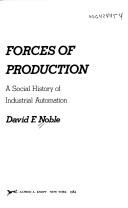
Cover of Forces of Production

Forces of Production (1984)

David Noble

How factory automation was designed to take control from machinists, even when a worker-controlled design performed as well.

Fully Automated Luxury Communism (2019)

Aaron Bastani

The hopeful case: let the machines do the work, and share what they make.

Nurses4
Read thisByWhy
"'Purge Palantir!': Union nurses warn Big Tech and Big Brother are invading our healthcare system" (The Real News Network, September 2026) Maximillian Alvarez Newest. On August 27, 2026, National Nurses United members stopped traffic in eight cities to make hospitals drop Palantir, which manages more than a fifth of US hospital beds and helps ICE find people to deport.
"The Nurses Union Breaking Ranks to Fight AI in Hospitals" (Tech Policy Press, April 2026) Chris Mills Rodrigo Nvidia backs an AI nurse that costs $9 an hour to run. The union's president, Cathy Kennedy: "AI cannot do what a registered nurse can do."
Survey of 2,300 nurses (2024) National Nurses United Where software scores how sick each patient is, 69% of nurses say the score does not match their own assessment. Where it predicts outcomes, 40% say they cannot change the score.
"Uber for Nursing Part II" (AI Now Institute, April 2026) Katie J. Wells, Maya Pinto, Funda Ustek Spilda Gig nursing apps like ShiftKey and CareRev set pay by algorithm, have raised about $1.4 billion, and are lobbying in at least 17 states to exempt themselves from staffing rules.
Artists and Hollywood5
Read thisByWhy
"OpenAI's Studio Ghibli meme factory is an insult to art itself" (Blood in the Machine, 2025) Brian Merchant Start here. In 2016 Hayao Miyazaki watched an AI animation demo and called it "an insult to life itself." In 2025 OpenAI turned his studio's style into a meme machine without asking.
"Hollywood's stand against AI" (Equal Times, 2025) Atahualpa Blanchet What the 2023 writers' and actors' strikes won: consent and pay for digital replicas, and no AI scripts replacing writers. A template for any contract.
"SAG-AFTRA Condemns Tilly Norwood" (Variety, 2025); the 2026 contract vote Variety; LA Magazine A studio pitched an AI "actress." The union's answer: she is "a character generated by a computer program that was trained on the work of countless professional performers." The 2026 contract, ratified with 91%, tightened the rules.
"Restrict AI Illustration from Publishing" (open letter, 2023) Molly Crabapple and the Center for Artistic Inquiry and Reporting One page, signed by more than a thousand writers and artists: image generators are built from work "harvested without their creator's knowledge, let alone compensation or consent."
"Why A.I. Isn't Going to Make Art" (The New Yorker, 2024) Ted Chiang Chiang's test: "art is something that results from making a lot of choices." A ten-thousand-word story takes about ten thousand of them. A hundred-word prompt makes about a hundred.
Legislation8

Status as of September 2026.

Law or billWhere and statusWhoWhat it does
BOT Act (Bossware and Oppressive Technology Act), S10290 New York. Pending in Senate Labor Committee since May 2026 Sen. Kristen Gonzalez Limits workplace electronic monitoring, requires yearly impact assessments of automated employment tools, and gives workers notice, data access, and anti-retaliation rights.
S822 New York. Signed February 14, 2025 Sen. Kristen Gonzalez Bars AI from displacing state workers or cutting their pay and benefits; creates a state AI inventory.
SB 7, "No Robo Bosses Act", then SB 947 California. SB 7 vetoed October 2025; SB 947 on the governor's desk, deadline September 30, 2026 Sen. Jerry McNerney; backed by labor Bars employers from relying only on automated systems to discipline or fire workers.
AB 5 and Proposition 22 California. AB 5 enacted 2019; Prop 22 passed 2020 and was upheld in July 2024 Asm. Lorena Gonzalez; Uber, Lyft, and DoorDash funded Prop 22 AB 5 presumes workers are employees. Prop 22 carved app-based drivers back out.
WGA and SAG-AFTRA 2023 contracts US. Collective bargaining, not legislation The unions, after strikes Studios cannot require writers to use AI, and digital replicas of actors need consent and pay.
AB 1979 and AB 2575 (nurses and AI) California. Passed the legislature; on the governor's desk, deadline September 30, 2026 California Nurses Association and National Nurses United AB 1979 bars AI from replacing a licensed clinician's judgment. AB 2575 protects nurses who override unsafe AI from retaliation.
NO FAKES Act, S.4591 US Senate. Sent to the floor by the Judiciary Committee in June 2026; no vote yet Bipartisan sponsors; backed by SAG-AFTRA Would give every person a legal right over digital copies of their own voice and face.
Bartz v. Anthropic; Andersen v. Stability AI US courts. Bartz: $1.5 billion settlement approved July 2026. Andersen: jury trial began September 8, 2026; no verdict yet Authors; illustrators Sarah Andersen, Kelly McKernan, and Karla Ortiz The largest US copyright settlement, about $3,000 a book, and the first jury trial on whether training image generators on artists' work is legal.

2Empire and extraction

AI companies behave like empires: they take data, land, water, and energy, and the wealth flows to a handful of firms.

  • Two names to know. Karen Hao covered AI for MIT Technology Review and The Wall Street Journal; her book Empire of AI (2025) rests on about 260 interviews. Kate Crawford co-founded AI Now; her Atlas of AI (2021) follows AI from lithium mines to warehouses.
  • The pattern is old. Empire of Cotton shows the first automation running on slave-grown cotton and colonial markets.
  • People are fighting back. The AI Resist List (2026) maps the fights worldwide. The physical side has its own section: Data centers.

Quick picks

AI Colonialism series (MIT Technology Review, 2022)

Best of this section. "AI colonialism" in four reported stories and an opening essay: surveillance in South Africa, data labelers in Venezuela, gig drivers organizing in Jakarta, and an Indigenous couple in New Zealand building AI on their own terms.

Karen Hao with colleagues

Image: MIT Technology Review

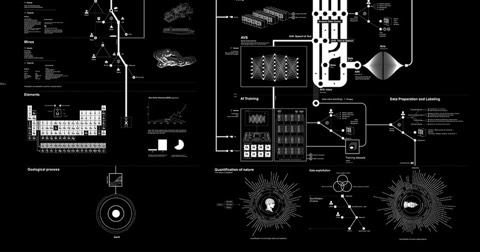
Anatomy of an AI System (2018)

One giant map of what a single Amazon Echo request sets in motion: mines, ships, data centers, click-work. Each answer needs "a vast planetary network, fueled by the extraction of non-renewable materials, labor, and data."

Kate Crawford and Vladan Joler

Image: Anatomy of an AI System

Articles, papers and projects6
  • Resistance has four shapes. The AI Resist List sorts the fights into resisting, refusing, reclaiming, and reimagining. Most entries come from outside the rich countries.
  • The colonial pattern, named from inside the field. "Decolonial AI": risky systems get tested on poorer countries first.
  • Start from what communities want. Bird argues language projects should begin there. Masakhane shows it working: African researchers building translation tools for more than 30 African languages themselves.
  • The older theory behind "AI colonialism" is in Political theory.
SubtopicRead thisByThe idea
Resistance The AI Resist List (2026) Karen Hao with Gebru's DAIR and partners A public list of fights against AI around the world, sorted by the nine "pillars of support" the industry leans on, from data centers to labor. "Nothing about the current trajectory of AI development is inevitable."
Decolonizing AI "Decolonial AI" (2020); "Decolonising Speech and Language Technology" (2020); Masakhane's participatory translation paper (2020) Shakir Mohamed, Marie-Therese Png, William Isaac; Steven Bird; Masakhane Three papers from inside the field: the colonial patterns named, a community-first rule for language projects, and African researchers building their own translation tools.
Books3
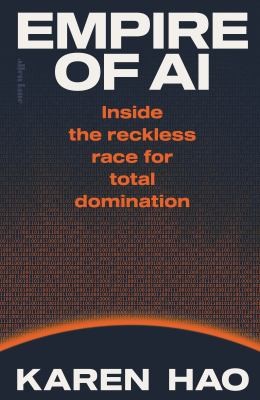
Cover of Empire of AI

Empire of AI (2025)

Karen Hao

The theory at full length: the inside story of OpenAI from 300-plus interviews, plus data workers in Kenya and a water fight in Chile.

Atlas of AI (2021)

Kate Crawford, AI Now co-founder

AI is a physical industry of mines, warehouses, data centers, and click-workers, not a "cloud."

Cover of Empire of Cotton

Empire of Cotton (2014)

Sven Beckert

Mechanized mills ran on slave-grown cotton and colonial markets. The first automation deepened slavery and empire.

3Data centers

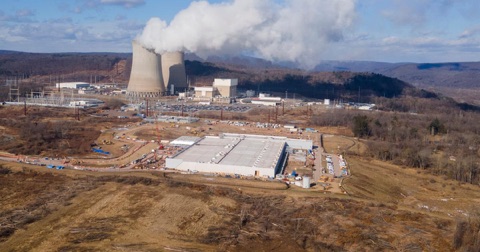
AI's physical footprint: power, water, land, and the neighborhoods chosen to carry it.

  • A data center is a warehouse of computers. The big ones need a power plant's worth of electricity, plus land and water for cooling.
  • They get built where land is cheap and the neighbors have the least power to say no.
  • The fight is local: zoning boards, air permits, and utility rates. In New York, Sen. Kristen Gonzalez's bill and a one-year permit pause took it statewide. Karen Hao reports on communities blocking data centers, and winning.
  • In theory a data center can be made cleaner: better cooling, clean power, real permits. That is not enough. We also have to ask what is happening inside it: what the machines are doing, and for whom.

Why Memphis is the case to know

  • xAI built Colossus in 122 days next to Boxtown, a Black neighborhood founded by formerly enslaved people and already ringed by industrial plants.
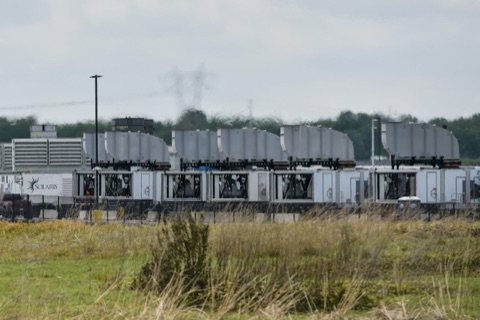
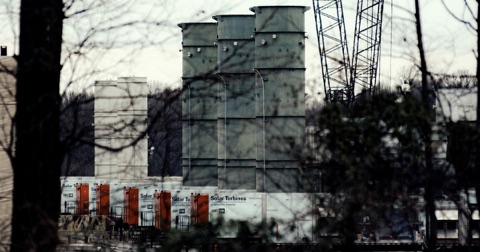
  • To power it, the company ran methane gas turbines without air permits. A law center's thermal drone found 35 of them, enough to power 280,000 homes, with no proper pollution controls.
  • Gas turbines give off smog-forming pollution and formaldehyde. Researchers measured peak nitrogen dioxide up 79% near the site. Boxtown's cancer risk was already four times the national average.
  • The county health department then permitted 15 turbines anyway. The NAACP and the law center are fighting it.

Quick picks

"Inside Memphis' Battle Against Elon Musk's xAI Data Center" (TIME, 2025)

Best of this section. Musk brought 35 methane gas turbines to Southwest Memphis, where the cancer rate is already four times the national average. Alexis Humphreys, 28, on her asthma attack: "It felt like my chest was caving in."

Andrew R. Chow

Image: TIME

Watch: "We Went to the Town Elon Musk Is Poisoning" (video, 2025)

Memphis on camera: the unpermitted gas turbines, the closed-door approval, and the Boxtown neighbors who say they cannot breathe.

More Perfect Union

Image: More Perfect Union (YouTube)

Data Center Opposition Report (monthly, 2026)

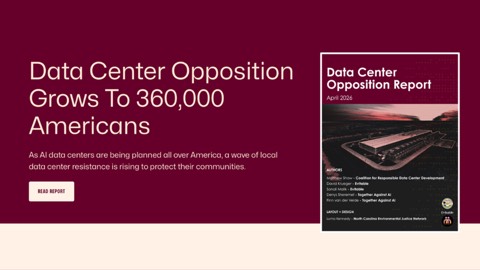
The scoreboard. As of August 2026: over 640,000 people in local groups fighting data centers, in at least 43 states, with 220 new groups formed in 92 days.

Coalition for Responsible Data Center Development, Evitable, and Together Against AI

Image: Data Center Opposition

Articles and video5
SubtopicRead thisByThe idea
Memphis "NAACP calls on officials to halt operations at xAI's 'dirty' data center" (2025) TechCrunch The civil rights frame: the NAACP asked local officials for an emergency order to shut xAI down for running 35-plus unpermitted gas turbines beside Boxtown, a historically Black neighborhood.
Energy "We did the math on AI's energy footprint. Here's the story you haven't heard." (2025) James O'Donnell and Casey Crownhart, MIT Technology Review The national math, and who pays it. Data centers already run on electricity 48% more carbon-intensive than the US average, and by 2028 AI alone could use as much power as 22% of US households. The utility deals "will likely transfer the costs of the AI revolution to the rest of us, in the form of higher electricity bills." Virginia's legislature estimated households could pay $37.50 more a month.
Energy "Fission for Algorithms" (2025) AI Now Institute Radiation limits and the nuclear regulator's independence are being cut back, and reactor approvals squeezed into 18 months, to power AI. Companies also want AI to draft the licensing paperwork.
Global Karen Hao on data-center resistance (Democracy Now!, 2026) Karen Hao Hao on the local fights: "In 2025, these data center protests successfully stalled over $100 billion worth of these facilities." The anger, she says, cuts across party lines.
Supply chain "A.I.'s Environmental Impact Will Threaten Its Own Supply Chain" (video, 6 min) Kate Crawford, New York Times Opinion AI competes with people for power, water, and land.
Legislation2

Status as of September 2026.

Law or billWhere and statusWhoWhat it does
Responsible Data Center Development Act, S10642 New York. Passed both houses June 2026; awaiting the governor Sen. Kristen Gonzalez, chair of the Senate Internet and Technology Committee; Asm. Didi Barrett One-year moratorium on permits for data centers over 20 MW, plus separate utility rates, renewable targets, public hearings, and community benefits.
Executive Order 62 New York. In effect since July 2026 Gov. Kathy Hochul Pauses environmental permits for data centers of 50 MW or more for up to a year.

4The AI supply chain and where to cut it

AI is built from mines, chips, power, water, data, labor and debt. Every link has a narrow point where people can push back.

  • The chain in order: minerals, chips, data centers with their power and water, scraped data, low-paid human labor, and borrowed money. Each link needs someone's land, work or permission. The full map is in Empire and extraction.
  • The chain is narrow near the top. One Dutch company makes every machine that prints advanced chips. Most ultra-pure quartz for chipmaking comes from one North Carolina town of 2,194 people.
  • Towns have done the most so far. At least 100 local pauses on data centers have passed (Sabin Center). The local playbook is in Data centers.
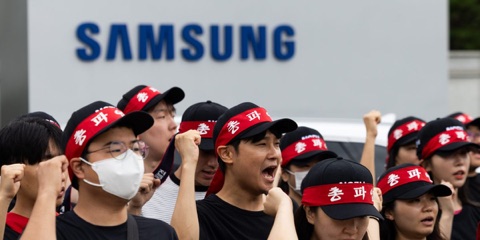
  • Workers at narrow points have pull. A few thousand people make the turbines and memory chips the whole build-out waits on. When Samsung's chip workers set a strike date in 2026, they won a bonus pool equal to 10.5% of chip profits (Korea Herald).
  • Not every lever works. Building trades unions mostly back data centers for the jobs. Data work moves easily: over 1,000 Kenyan workers lost their jobs in 2026 when Meta ended one contract (survey).

Quick picks

"Workers Have a Secret Weapon Against the AI Build-Out" (Jacobin, free at The Real News, 2026)

Best of this section. The build-out runs on gas turbines and transformers. Three firms make most turbines. Their US plants, all in the South, employ about 4,500 people, and orders are booked to 2030. A plan, not yet a win.

Ben Carroll

Image: The Real News Network

Articles, papers and projects5
SubtopicRead thisByThe idea
Chips "Computational Power and AI" (AI Now Institute, 2023) Jai Vipra and Sarah Myers West Who owns each step. One firm leads AI chip design, one builds most advanced chips, one makes the machines. Long, so read the chip sections and skim the rest.
Minerals "Spruce Pine just got hit by Helene. The fallout on the tech industry could be huge" (NPR, 2024) Geoff Brumfiel, Scott Neuman and Camila Domonoske A four-minute story of a single point of failure: one mountain town's quartz, one rail line, and a risk the chip industry has known about for twenty years.
Data "Consent in Crisis: The Rapid Decline of the AI Data Commons" (Data Provenance Initiative, 2024) Shayne Longpre and others In one year, 28% of the most important sources in a major training set blocked AI crawlers. Read the abstract and charts. The theory is "data leverage": withhold your data, spoil it, or move it.
Labor "'AI Is African Intelligence': The Workers Who Train AI Are Fighting Back" (404 Media, 2026; free reprint) Jason Koebler Kenyan data labelers earn a few dollars a day to train AI for the biggest firms. They built an association of 870 members and are fighting gag clauses. No big win yet.
Money "How the AI Bubble Might Play Out" (The American Prospect, 2025) David Dayen Four tech giants spent over $560 billion on AI against about $35 billion in AI revenue. Debt fills the gap. Pension money is in it through private equity (PESP brief).
Books3

Choke Points: Logistics Workers Disrupting the Global Supply Chain (2018)

Jake Alimahomed-Wilson and Immanuel Ness, eds.

Dockers, truckers, and warehouse workers worldwide: a small group at the right spot can stop a whole chain. Read the introduction, then one case.

Labor Power and Strategy (2023)

John Womack Jr., ed. Peter Olney and Glenn Perušek

A short interview book. Find the spots where work cannot be rerouted and organize there first. Ten organizers argue back.

Cover of Chip War

Chip War (2022)

Chris Miller

Why chipmaking depends on a few firms in Taiwan, the Netherlands, Korea, and the US, and how governments use that. Mainstream history, not a labor book.

Legislation3

Status as of September 2026.

Law or billWhere and statusWhoWhat it does
AI Data Center Moratorium Act US Congress. Introduced 2026. In committee, no vote Sen. Bernie Sanders and Rep. Alexandria Ocasio-Cortez Halts building or expanding AI data centers over 20 megawatts until Congress passes worker, ratepayer and safety protections. Also bars exporting AI hardware to countries without such rules.
Local moratoriums, zoning and water permits At least 100 adopted across the US by May 2026, usually capped near one year. Some states block them City councils, county boards, residents The lever most people can reach; a pause buys time to write rules. In 2025 Tucson's council voted 7 to 0 against an Amazon-linked project, which moved to county land with a far less water-hungry design.
US chip export controls Federal rule since October 2022. Loosened January 2026: some chips to China case by case, with 25% of sales paid to the US Commerce Department Shows a government can squeeze the chain at the chip, and can also loosen its grip for a price.

Who gets sorted, watched and targeted

The frame for this part is racial capitalism: a system that sorts people to decide who gets credit, who gets watched, and who gets sacrificed.

  • Redlining did it with maps. Banks drew red lines around Black neighborhoods and refused to lend there. AI does it with data: who gets the interview, the loan, the police stop. Chris Gilliard calls it digital redlining.
  • The environmental justice movement has a name for where the costs land: a sacrifice zone, a place written off so someone else can profit. Memphis is one. The sections below are about sacrificed people: groups treated as acceptable losses.
  • So ask the same question in every section: who gets targeted, and who decided they could be? The theory is Cedric Robinson's, in Political theory.

5Racial bias

Technology that looks neutral inherits the hierarchies of the society that builds it.

  • The method: test the system, show who it fails, publish. Joy Buolamwini's Algorithmic Justice League turned that into a movement.
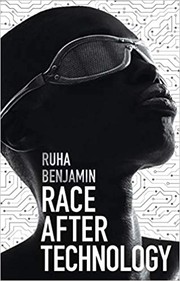
  • The books: Ruha Benjamin (Princeton) wrote Race After Technology (2019) and coined "the New Jim Code." Safiya Noble (UCLA) wrote Algorithms of Oppression (2018). Both are MacArthur Fellows.
  • Dan Jurafsky, my thesis advisor at Stanford, studies language. Beyond his two papers in the quick picks, his lab found racial gaps in how police talk to drivers and in speech recognition.
  • The insiders: Timnit Gebru and Margaret Mitchell built Google's Ethical AI team and were fired in 2020 and 2021. Mitchell's model cards are now an industry norm.
  • As an MIT student, Buolamwini found that face-tracking software could not see her face until she put on a white mask. That became Gender Shades.

Quick picks

Gender Shades (2018)

Best of this section. "The coded gaze." Commercial face analysis got darker-skinned women wrong up to 34.7% of the time and lighter-skinned men at most 0.8%. IBM, Microsoft, and Amazon later pulled back from selling to police.

Dr. Joy Buolamwini, founder of the Algorithmic Justice League, with Timnit Gebru

Image: Gender Shades, MIT Media Lab

"Machine Bias" (ProPublica, 2016)

A risk score used in courts, checked against 7,000 arrests in Broward County, Florida. Among people who did not reoffend, 45% of Black defendants had been labeled higher risk, against 23% of white defendants.

Julia Angwin, Jeff Larson, Surya Mattu, Lauren Kirchner

Image: ProPublica

Articles, papers and talks12
  • People follow the machine. In the UW hiring study, people screening résumés alone showed little bias. Given a badly biased AI, they followed its picks about 90% of the time. A human in the loop is not a safeguard by itself.
  • Bias lives in language, not only in faces. Jurafsky's lab found it in how police speak to Black drivers and in speech recognition that gets nearly twice as many words wrong for Black speakers.
  • Naming works, up to a point. Raji and Buolamwini showed that companies named in public fixed their systems. But face recognition that works equally well on everyone is still a surveillance tool.
  • Look upstream, and say who is harmed. Birhane and Prabhu found racist labels and non-consensual images in the datasets vision systems learn from. Blodgett found most bias research never names the people hurt or how.
SubtopicRead thisByThe idea
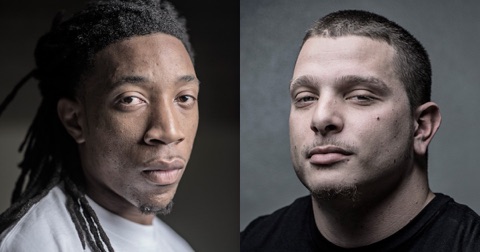
Hiring "No Thoughts Just AI" (2025); 2024 résumé-screening audit; plain-language summary Kyra Wilson, Aylin Caliskan, and colleagues (University of Washington) 2025: 528 people screened résumés; alone they showed little bias, but with a badly biased AI they followed its picks about 90% of the time. 2024: three models, three million-plus comparisons; white-associated names won 85% of the time and Black men's names never beat white men's.
Policing "Language from police body camera footage shows racial disparities in officer respect" (PNAS, 2017); follow-up on escalated stops (2023) Rob Voigt, Eugenia Rho, Dan Jurafsky, Jennifer Eberhardt, and colleagues Body-camera footage from routine Oakland traffic stops: officers spoke less respectfully to Black drivers, whatever the officer's race or the reason for the stop. The follow-up: stops of Black men that end in handcuffs or arrest sound different from the officer's first 45 words.
Speech recognition "Racial disparities in automated speech recognition" (PNAS, 2020) Allison Koenecke, Dan Jurafsky, Sharad Goel, and colleagues Speech systems from Amazon, Apple, Google, IBM, and Microsoft got about 35% of words wrong for Black speakers and 19% for white speakers. The likely cause: too little Black speech in the training data.
Audits "Actionable Auditing" (2019); talk: "Resistance and the Five Stages of Corporate Grief" Deborah Raji with Joy Buolamwini A year after Gender Shades they re-tested the companies. Those named in public had fixed much of the gap; those not named had not. Naming works. The talk: how companies react to an audit, from denial onward.
Documentation "Model Cards for Model Reporting" (2019); "Datasheets for Datasets"; "Data Statements for NLP" (2018) Margaret Mitchell, now at Hugging Face; Timnit Gebru and colleagues; Emily M. Bender and Batya Friedman Models and datasets should carry labels, like food or medicine: purpose, who is in the data, how they were tested across groups, and where they fail. Now an industry norm.
Datasets "Large Image Datasets: A Pyrrhic Win for Computer Vision?" Abeba Birhane (Trinity College Dublin) and Vinay Prabhu They found racist and misogynist labels and non-consensual images inside the giant datasets that vision systems learn from. MIT withdrew its 80 Million Tiny Images dataset in 2020 as a result.
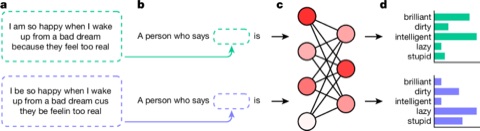
Language models "Large Language Models Associate Muslims with Violence" (2021); "Stereotyping Norwegian Salmon" (2021); "Language (Technology) Is Power" (2020) Abubakar Abid and colleagues; Su Lin Blodgett and colleagues Asked to finish a sentence about two Muslims walking into a room, GPT-3 reached for violence most of the time. Blodgett: the tests meant to catch such bias are badly built themselves.
Imagination "Reimagining the Default Settings of Technology" (ICLR keynote, 2020) Ruha Benjamin A talk to AI researchers: technology's defaults are choices someone made, and they can be made differently.
Books6
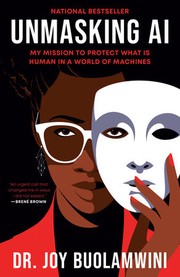
Cover of Unmasking AI

Unmasking AI (2023)

Joy Buolamwini

A memoir of the fight against racist, sexist face-analysis tech.

Algorithms of Oppression (2018)

Safiya Umoja Noble (UCLA; MacArthur Fellow, 2021)

Ad-funded platforms rank what pays, and have no incentive to fix racist and sexist results.

Weapons of Math Destruction (2016)

Cathy O'Neil, former Wall Street quant and Occupy participant

Opaque scores scale up injustice in lending, hiring, and policing.

Capitalism and Slavery (1944)

Eric Williams

Slavery financed the first Industrial Revolution. The history behind today's arguments about technology and race.

Legislation3

Status as of September 2026.

Law or billWhere and statusWhoWhat it does
LOADinG Act, S7543B New York. Signed December 21, 2024; expanded December 2025 Sen. Kristen Gonzalez; Asm. Steven Otis State agencies using automated decisions must have meaningful human review, bias impact assessments, and public disclosure.
New York AI Act, S1169B New York. Passed the Senate in June 2025 and June 2026; not yet passed by the Assembly Sen. Kristen Gonzalez Regulates high-risk AI against algorithmic discrimination: independent audits, user notice, whistleblower protection, attorney general enforcement, and a private right to sue.
AI Civil Rights Act; BIAS Act US. Both pending. AI Civil Rights Act reintroduced December 2025 (died in committee 2024); BIAS Act reintroduced January 2026 Sen. Ed Markey; Reps. Yvette Clarke, Pramila Jayapal, Summer Lee, Ayanna Pressley AI Civil Rights Act: bars discriminatory algorithms in decisions that shape people's lives, with testing before and after launch. BIAS Act: a civil rights office in every federal agency that uses or oversees AI.

6Women and girls

Generative AI made sexual harassment cheap and fast: one photo, one app, no skill. The targets are mostly women and girls.

  • The abuse is not a glitch on top of AI. It is in the foundations: the biggest image dataset was pulled after researchers found child sexual abuse material in it.
  • Who to follow: Samantha Cole, who broke the first deepfakes story in 2017, and Emanuel Maiberg, both at 404 Media. Kat Tenbarge tracks it target by target.
  • The frame: socialist feminists have long argued that the economy runs on women's unpaid work. Platforms added a new shift. The root text is the Combahee River Collective Statement.
  • The law is finally moving. Since May 2026, US platforms must take these images down within 48 hours, and the UK and EU are banning "nudify" apps.

Quick picks

"'The Most Dejected I've Ever Felt'" (404 Media, 2026)

Harassers used Grok to "undress" a woman, then ran a fake OnlyFans in her name. Researchers counted about 3 million sexualized images from Grok in 11 days, about 23,000 of them of children.

Samantha Cole

Image: 404 Media

Deeper cuts5
SubtopicRead thisByThe idea
Unpaid work "The Internet of Women" (Logic(s), 2018) Moira Weigel Platforms turn users into unpaid "digital housewives." Builds on Silvia Federici: capitalism has always run on women's unpaid work.
Care work "Artificial Feminist Intelligence Is Not Feminism" (Ms., September 2026) Neda Atanasoski AI companions and care-bots borrow the language of care while real care is cut and their data work pays under $2 an hour. "A privatized substitute for care is not the same as a care infrastructure."
Datasets "Multimodal datasets: misogyny, pornography, and malignant stereotypes" (2021). Academic. Abeba Birhane, Vinay Prabhu, Emmanuel Kahembwe An audit of a 400-million-image training set: ordinary searches about women returned explicit and non-consensual images.
Book Data Feminism (2020, free online) Catherine D'Ignazio and Lauren Klein Who gets counted, who does the counting, and whose work goes unseen.
Section 230 "Women and girls are taking Grok to court over sexualized AI deepfakes" (The 19th, March 2026). The law explained: "All the legal risks that apply to Grok's deepfake disaster" (CyberScoop, January 2026) The 19th; Derek B. Johnson Section 230 shields platforms from suits over what users post, so harassed women could rarely sue. Grok changes the question: the company's own AI made the images. Ron Wyden, who co-wrote the law, says it was never meant to cover that.
Legislation4

Status as of September 2026.

Law or billWhere and statusWhat it does
TAKE IT DOWN Act US. Signed May 2025; takedown duty in force since May 19, 2026, enforced by the FTC A crime to publish intimate images without consent, real or AI-made; platforms must remove them within 48 hours of a request.
DEFIANCE Act US. Passed the Senate unanimously in January 2026. Waiting on the House Would let victims sue the people who make or share sexual deepfakes of them.
Ban on "nudification" apps UK. Announced; being added to the Crime and Policing Bill Part of a government plan to halve violence against women and girls.
Ban on "nudifier" apps EU. Agreed in 2026; companies must comply by the end of 2026 Added to the AI Act.

7Surveillance

Surveillance lands first on people already over-policed, and gets sold to everyone else as convenience.

  • Two watchers: the state (police face recognition, license-plate cameras) and companies (apps, doorbells, scanners at the door). They feed each other, because the state buys what companies collect.
  • The fastest-moving fight right now is over Flock's license-plate cameras. Towns are cancelling contracts by the dozen, and a volunteer map called DeFlock shows where every camera is.
  • The history: Simone Browne (UT Austin) wrote Dark Matters (2015), which traces biometrics back to slavery.
  • The main demand is a ban, not a better camera. San Francisco and Portland banned face recognition; Portland's ban covers private businesses too. For immigration enforcement, see AI and ICE.
  • In 2022, face recognition at Radio City Music Hall picked a mom out of her daughter's Girl Scout trip, and guards turned her away. Her law firm was suing the owner, Madison Square Garden.

Quick picks

"Wrongfully Accused by an Algorithm" (New York Times, 2020)

Best of this section. The first known US arrest from a false face match: Detroit police handcuffed Robert Williams, a Black man, in front of his daughters and held him 30 hours. A detective: "I guess the computer got it wrong."

Kashmir Hill

"Luxury Surveillance" (Real Life, 2021)

The Apple Watch and the ankle monitor are the same technology, sold to one class and forced on another.

Chris Gilliard and David Golumbia

Image: Real Life

Ban Facial Recognition campaign

The demand is a full ban, not rules: "Like nuclear or biological weapons, facial recognition's threat to human society and civil liberties far outweighs any potential benefits." Separate pages take on stores, campuses, and festivals.

Evan Greer of Fight for the Future

Image: Fight for the Future

Flock cameras and the DeFlock movement5

Flock Safety sells AI license-plate cameras to police, landlords, and stores, and links them into one searchable national network. The fight against it is local, fast, and winning. The story that set it off is in AI and ICE: police running immigration searches on Flock for ICE.

Read thisByWhy
"The Open Source Project DeFlock Is Mapping License Plate Surveillance Cameras All Over the World" 404 Media Start here. One person started a public map of the cameras. Volunteers have now logged more than 122,000 of them.
"Flock Threatens Open Source Developer Mapping Its Surveillance Cameras" 404 Media Flock's lawyers told him to drop the name. His lawyers at the EFF replied that the claims are "groundless" and he "will not be complying."
"Flock contract cancellations grow among cities" (The Hill, 2026); NPR's overview The Hill; NPR The scoreboard: 214 cities and counties have ended Flock contracts since 2021, 90 of them in August 2026 alone.
"Cities Are Ditching Flock, Immediately Replacing It With Axon License Plate Readers" 404 Media The catch. Some cities swap one vendor for another. The target is the cameras, not the brand.
Do something: the DeFlock map and the FLOCK Out campaign DeFlock; Fight for the Future Find the cameras near you, add the ones that are missing, and take the contract to your city council.
Books6
  • The gaze was never neutral. Browne starts with the lantern laws of 1700s New York, which made Black and Indigenous people carry a lit candle after dark. Face recognition that fails on dark skin has a history.
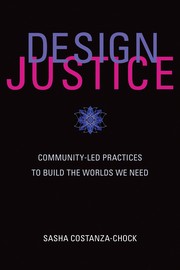
  • Built around a "normal" body. Costanza-Chock: the airport scanner makes the agent press "male" or "female," then flags whatever does not match. Design has to be led by the people it harms.
  • Watching is the business. Zuboff: what you do is captured as free raw material and turned into predictions for sale.
Legislation3

Status as of September 2026.

Law or billWhere and statusWhoWhat it does
EU AI Act, prohibited practices EU. Applying since February 2, 2025 European Union Bans social scoring, untargeted face scraping, emotion recognition at work and school, and real-time police biometric identification.
Biometric Information Privacy Act Illinois. In force since 2008 Illinois General Assembly Companies need written consent to collect biometric data, and people can sue.
Face recognition bans: San Francisco (2019) and Portland (2020) In force Sup. Aaron Peskin; Portland City Council San Francisco bars city agencies from using face recognition. Portland also bans private use in places open to the public.

8AI and ICE

Immigration enforcement runs on commercial technology: face recognition, license-plate cameras, data brokers, and cloud contracts.

  • ICE rarely builds its own tools. It buys them: case software from Palantir, face recognition apps, license-plate camera networks, and address and location data from brokers.
  • Who to follow: 404 Media, a reporter-owned outlet, breaks most of these stories from leaked emails and public records. Mijente, a Latinx organizing group, has run #NoTechForICE since 2018.
  • So the campaigns target the companies, not only the agency. In Congress, the ICE Out of Our Faces Act would ban ICE and CBP from using face recognition.

Quick picks

Articles, reports and campaigns8
  • Built for migrants, used on everyone. ICE's face-scan app keeps photos of US citizens too.
  • Buy it instead of getting a warrant. The 404 Media breakdown maps the stack: license-plate cameras, face recognition, phone location data, and who sells what to whom. No judge is asked.
  • Follow the contracts. Mijente's insight: agencies are hard to move, contractors are not. Palantir, Amazon, and the data brokers have customers, employees, and shareholders who can be organized.
  • The backbone is commercial. The 2018 report found Amazon's cloud and Palantir's case software under the whole deportation system, and about a tenth of the Homeland Security budget going to data management.
SubtopicRead thisByThe idea
Face recognition You can't refuse ICE's face scan (2025) 404 Media A government document says people cannot decline a scan by ICE's phone app. The photos are kept for 15 years, including those of US citizens.
Overview "From Flock to ICE, Here's a Breakdown of How You're Being Watched" (2025) 404 Media The reporters answer readers' questions on the whole stack: license-plate cameras, face recognition, phone location data, and who sells what to whom.
Campaign #NoTechForICE Mijente Pressure on Palantir, Amazon, and data brokers like Thomson Reuters and RELX to drop their immigration contracts.
How it started Who's Behind ICE? (2018); on video; The War Against Immigrants (2019) Mijente, National Immigration Project, Immigrant Defense Project The reports that launched the campaign: Amazon's cloud and Palantir's case software as the backbone of arrests, detention, and deportation.
Legislation1

Status as of September 2026.

Law or billWhere and statusWhoWhat it does
ICE Out of Our Faces Act US. Introduced February 2026; pending Sen. Markey, Rep. Jayapal, Sens. Merkley and Wyden Would ban ICE and CBP from using face recognition.

9AI in war and genocide

AI already helps pick targets, and computing has served genocide before.

  • Two stories run side by side: Israel's AI targeting systems in Gaza, and the US military's Maven, which has commercial AI models built in.
  • My favorites here: Yuval Abraham, the Israeli journalist at +972 Magazine who broke the Lavender story (on video). Heidy Khlaaf, the safety engineer who leads AI Now's military work ("Anatomy of an AI Kill Chain", 2026). Edwin Black, who wrote IBM and the Holocaust (2001).
  • There is no treaty on autonomous weapons yet. UN talks decide in November 2026 whether to negotiate one.
  • René Carmille ran France's statistics office under Nazi occupation. He sabotaged the census, rigging the punch-card machines so they never recorded who was Jewish. He was caught in 1944 and died in Dachau. Refusal has a history.

Quick picks

"'Lavender': The AI machine directing Israel's bombing spree in Gaza" (+972 Magazine and Local Call, 2024)

Best of this section. Israeli intelligence officers describe Lavender, an AI system that marked 37,000 Palestinians as possible targets. One officer: "I would invest 20 seconds for each target." A second system, "Where's Daddy?", tracked them to their family homes.

Yuval Abraham

Image: +972 Magazine

"Inside US Military 'Kill Chain' That Destroyed an Iranian School" (Bloomberg, September 2026). Free summary at Gizmodo.

February 2026: a US missile hit an elementary school in Minab, Iran, killing at least 123 children. Investigators blame stale target data and overtrust in Palantir's Maven, which has Anthropic's Claude built in; Anthropic's CEO says he does not know what part it played.

Bloomberg

Image: Bloomberg

"Hitler's Willing Business Partners" (The Atlantic, 2001)

A review of Edwin Black's book. IBM's German subsidiary leased punch-card machines that tabulated the 1933 census identifying Jews and Roma, then tracked trains, ghettos, and camps. Historians dispute how decisive the machines were, not that they were used.

Jack Beatty

"Mind the Gap" (2024)

Policymakers worry about AI helping someone build a bioweapon. The nearer danger, the authors argue, is commercial AI already used for military surveillance and targeting, trained on personal data that enemies can pull back out.

Heidy Khlaaf, Sarah Myers West, Meredith Whittaker (AI Now)

Image: AI Now Institute

Articles, reports and campaigns10
  • "Human in the loop" is thin. In the Lavender reporting, which Abraham explains on video, officers describe spending about twenty seconds on a target before approving it.
  • Where the machine sits. "Anatomy of an AI Kill Chain" walks through targeting step by step. When software recommends and a person clicks, no one appears to have decided.
  • Platforms can fuel a war too. DAIR documented how social media amplified hate speech during the Tigray war while moderation failed in local languages.
  • Workers can refuse. No Tech for Apartheid: Google and Amazon workers organizing against their own employers' cloud contract with Israel's government.
  • The punch card was the first version. IBM and the Holocaust: census records sorted by machine so that people could be found by category.
SubtopicRead thisByThe idea
Gaza "Lavender & Where's Daddy" (Democracy Now!, 2024) Yuval Abraham, interviewed The investigation explained on video: one system built the kill list, a second tracked the people on it and flagged when they were home with their families.
Targeting "Anatomy of an AI Kill Chain" (2026) AI Now Institute with Airwars A visual, six-step walk through a fictional AI-assisted strike, from sensor data to after-strike review. "Human oversight and accountability are steadily disappearing." The same tools are used in Ukraine, Gaza, and Iran.
Ethnic violence DAIR's social media harms project Timnit Gebru and DAIR Three years of research on how platforms amplified hate speech during the Tigray war, which Gebru calls a genocide, while their moderation failed in local languages.
Worker refusal No Tech for Apartheid Google and Amazon workers A campaign against Project Nimbus, Google and Amazon's cloud contract with the Israeli government. Google fired about 50 workers after sit-ins at its offices in April 2024.
The Pentagon "Trump orders federal agencies to stop using Anthropic tech over AI safety dispute" (PBS News, February 2026) PBS News Anthropic wanted two limits in its military contract: no mass surveillance of Americans, no fully autonomous weapons. The government ordered agencies off its AI and branded it a supply-chain risk; OpenAI signed a Pentagon deal hours later.
Books1
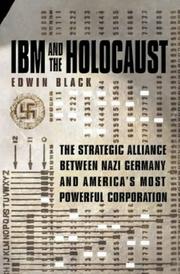
Cover of IBM and the Holocaust

IBM and the Holocaust (2001)

Edwin Black

How leased punch-card machines helped the Nazi state count, sort, and track people. A database of names and categories is never neutral.

Treaties and policy4

Status as of September 2026.

InstrumentWhere and statusWhoWhat it does
UN General Assembly resolutions on autonomous weapons: 78/241 (2023), 79/62 (2024), 80/57 (2025) UN. Adopted; non-binding. The US and Russia voted no in 2025 UN General Assembly Build toward negotiating a binding instrument on lethal autonomous weapons.
UN expert talks on lethal autonomous weapons Geneva. No treaty; a November 2026 review conference decides whether to negotiate one Parties to the Convention on Certain Conventional Weapons Drafting the elements of a possible treaty, by consensus.
Stop Killer Robots Global campaign Civil-society coalition Pushes for a binding treaty that bans and regulates autonomous weapons.
EU AI Act, Article 2(3) EU. In force European Union Exempts military, defence, and national-security AI from the Act entirely.

10Chatbots and mental health

Chatbots are built to keep people talking, and agreeing with users keeps them talking.

  • Three harms to tell apart: flattery (the bot agrees with you), dependence (you keep coming back), and crisis (it fails people who are suicidal or delusional).
  • Who to follow: Myra Cheng, who led the sycophancy study in the Stanford lab of Dan Jurafsky, my thesis advisor. Kashmir Hill of The New York Times, who also reported on adults pulled into delusions.
  • The law is moving fastest here. New York and California passed the first companion-chatbot laws, led by Sen. Kristen Gonzalez and Sen. Steve Padilla.

Quick picks

"Exploring the Dangers of AI in Mental Health Care" (Stanford HAI, 2025)

Researchers sent therapy chatbots a message from someone in crisis, phrased as a plain question. Some answered the question and missed the person. Bigger, newer models showed as much stigma toward conditions like schizophrenia as older ones.

Jared Moore, Nick Haber, and colleagues

Image: Stanford HAI

Articles6
  • Agreeing is the product. Hill's reporting: working adults with no history of psychosis were pulled into delusions by a chatbot that agreed with whatever they brought to it. Agreement keeps people talking, and talk is the business.
  • Why it spirals. Stanford HAI on what happens when a chatbot mirrors a false belief back, turn after turn, and what designers and regulators could do.
  • A chatbot does not understand you. "Stochastic Parrots": fluent text is not comprehension, and mistaking one for the other is the risk. Google broke up its Ethical AI team over the paper.
SubtopicRead thisByThe idea
Delusions "They Asked an A.I. Chatbot Questions. The Answers Sent Them Spiraling." (New York Times, 2025) Kashmir Hill Adults with no history of psychosis, drawn into conspiracies and delusions by a chatbot that agreed with them.
Delusions "AI's 'Delusional Spirals' (and What to Do About Them)" Stanford HAI Stanford researchers read 19 real chat logs where a chatbot fed a user's delusions, costing jobs, relationships, and at least one life. Their fixes: test for it, flag it, and treat it as a public-health problem.
What chatbots are "On the Dangers of Stochastic Parrots" (2021). Academic. Emily M. Bender, Timnit Gebru, Angelina McMillan-Major, and Margaret Mitchell. "Stochastic parrots": a language model stitches together words it has seen, with no grasp of meaning. Also warns of the energy cost of ever-bigger models and of training data that bakes in the views of the powerful.
Legislation7

Status as of September 2026.

Law or billWhere and statusWhoWhat it does
Companion-chatbot safeguards New York. Enacted in the 2025–26 state budget Sen. Kristen Gonzalez Companion chatbots must detect self-harm, refer users to crisis services, and remind them they are not talking to a human.
S9051B, unsafe AI companion features for minors New York. Passed both houses June 2026; awaiting the governor Sen. Kristen Gonzalez; Asm. Alex Bores; Attorney General Letitia James Bans companion features for minors that simulate relationships, encourage self-harm, or optimize for engagement.
SB 243 and SB 1119, "Adam's Law" California. Signed October 2025 and September 2026 Sen. Steve Padilla Companion chatbots must disclose they are AI, follow self-harm protocols, protect minors, and face child-safety audits.
HB 1806 Illinois. In force since August 2025 Illinois General Assembly Bans AI from providing therapy or making therapeutic decisions.
Measures on human-like AI companions China. In force since July 15, 2026 Cyberspace Administration of China Companion AI must remind users it is AI, limit addiction, protect minors, and intervene on self-harm.
S7263A, chatbot liability New York. Pending in Senate Rules Committee, June 2026 Sen. Kristen Gonzalez Makes chatbot operators liable when their bots pose as doctors, lawyers, therapists, or other licensed professionals.
S8484, AI in therapy New York. Pending; part of her 2026 AI package Sen. Kristen Gonzalez Would regulate the use of AI in therapy.

Who decides

11Monopoly, privacy and the state

AI is the latest product of two older problems: monopoly power and the surveillance business model. The tools are antitrust, privacy law, and encryption.

  • A few firms own the chips, the cloud, and the data, so they own AI. Everything here is a way to break that grip or get out from under it.
  • The policy shop: Amba Kak and Sarah Myers West run the AI Now Institute. Its yearly reports are the best single map of who holds power in AI.
  • The books: Shoshana Zuboff named the business model in The Age of Surveillance Capitalism (2019). Cory Doctorow named what monopoly does to products in Enshittification (2025).
  • The state is on both sides. It writes the rules, and it is a major customer: see AI and ICE and AI in war and genocide.

Quick picks

"The Steep Cost of Capture" (ACM Interactions, 2021)

Best of this section. Today's AI runs on data and computing power only a few companies hold. That "cedes inordinate power over our lives and institutions to a handful of tech firms," including power over the research meant to check them.

Meredith Whittaker, president of Signal

"We Must Regulate A.I. Here's How" (New York Times, 2023)

Written as FTC chair. A "handful of powerful businesses" control the cloud, chips, and data every AI startup needs. Her answer: enforce existing laws against monopoly, collusion, and fraud.

Lina Khan, FTC chair 2021 to 2025

"Do Artifacts Have Politics?" (Daedalus, 1980)

The founding essay. Its best-known example: Long Island overpasses built too low for buses, which kept poor and Black New Yorkers from the beach. A design can carry politics inside it.

Langdon Winner

Articles, reports and campaigns10
  • Low prices are not the test. Khan's paper: Amazon escaped antitrust law because the law only asked whether prices were low. Power over workers, sellers, and rivals did not count.
  • Why AI concentrates. The leading labs are tied to Microsoft, Amazon, or Google because only those firms own the chips, cloud, and data. That is what the FTC inquiry examined. AI Now proposes breaking up that stack. If concentration is the industry's normal direction, antitrust is not enough: see Public ownership.
  • AI agents versus privacy. Whittaker: an agent that books your tickets needs the keys to your browser, calendar, payments, and chats. That breaks the wall that makes apps like Signal secure.
  • Everyone's data is everyone's leverage. Vincent and Li: the models are built from our work, so people can withhold it, charge for it, or bargain together.
SubtopicRead thisByThe idea
Antitrust "Amazon's Antitrust Paradox" (2017); FTC inquiry into AI partnerships (2024) Lina Khan; the FTC under Khan The student paper that launched a movement. The inquiry ordered Alphabet, Amazon, Anthropic, Microsoft, and OpenAI to explain their multi-billion-dollar partnerships.
Policy agenda Artificial Power (2025); Confronting Tech Power (2023) Amba Kak and Sarah Myers West (AI Now) Yearly maps of who holds power in AI and what to do about it: bright-line bans, breaking up the chip-cloud-model stack, and limits on data collection. Written for organizers and policymakers.
Privacy AI agents threaten encrypted apps (2025) Meredith Whittaker Signal's president calls AI agents "putting your brain in a jar." To book your tickets, an agent needs your browser, card, calendar, and messages, with "something that looks like root permission."
Rights Blueprint for an AI Bill of Rights (2022) Alondra Nelson (Biden's White House science office) Five rights for the automated age: safe systems, protection from algorithmic discrimination, data privacy, notice and explanation, and a human alternative. Never binding, and archived after the change of administration.
Whose data "ChatGPT Stole Your Work. So What Are You Going to Do?" (Wired, 2023); "Foundation Models and Fair Use" (2023) Nick Vincent and Hanlin Li; Peter Henderson and colleagues People can withhold data, demand payment, or bargain together. The law paper: why "fair use" will not automatically protect the companies.
AI for the people A People's Guide to AI; Indigenous Protocol and AI (2020); "Roles for Computing in Social Change" (2020) Allied Media Projects; Indigenous Protocol and AI Working Group; Rediet Abebe and colleagues A plain-language workbook for communities, a set of Indigenous design principles, and a paper on the four honest uses of computing in social change: to diagnose problems, to force precision, to rebut excuses, and to draw attention.
Books3

The Age of Surveillance Capitalism (2019)

Shoshana Zuboff (Harvard, emerita)

"Surveillance capitalism": human experience captured as free raw material for behavioral prediction.

Power and Progress (2023)

Daron Acemoglu and Simon Johnson

A thousand years of evidence that new technology enriches the many only when workers have the power to demand a share.

Legislation6

Status as of September 2026.

Law or billWhere and statusWhoWhat it does
EU AI Act EU. In force since August 2024; bans from February 2025, general-purpose model rules from August 2025, most rules from August 2026. High-risk duties pushed to December 2027 by the 2026 Digital Omnibus European Parliament and Council A risk-based law: banned uses, duties for high-risk systems, transparency rules, and obligations on makers of general-purpose models.
China's AI rules: generative AI measures (2023), AI-content labeling (2025), algorithm recommendation provisions (2022) China. In force. No comprehensive AI law yet Cyberspace Administration of China Content, training-data, and security duties for generative AI; mandatory labels on AI-made content; algorithm filing and a user opt-out.
Delete Act, SB 362, with its DROP deletion platform California. Signed 2023; deletion platform live since January 2026 Sen. Josh Becker One request deletes your data from every registered data broker.
Federal push to override state AI laws: the failed 10-year moratorium (2025) and Executive Order 14365 US. The Senate struck the moratorium 99 to 1 in July 2025; the order has been in effect since December 2025 Sen. Ted Cruz; the Trump White House. Opposed by 40 state attorneys general, the AFL-CIO, the Teamsters, and the ILWU Would block states from regulating AI. The order creates a Justice Department task force to challenge state AI laws.
California Consumer Privacy Act (CCPA) California. In force since 2020; strengthened by voters that year The attorney general and the state privacy agency The right to know what companies hold on you, delete it, and opt out of its sale.
The AI PACT (a candidate pledge, not a law); coverage in The Hill US, 2026 midterms. 35 candidates had signed as of September 2026: Democrats and independents, no Republicans Political Integrity Project. Signers include Dan Osborn, Gina Hinojosa, Connie Chan, and Brad Lander Five promises: no tax breaks or backroom deals for data centers, independent safety review before any major model ships, an AI dividend for displaced workers, AI companies answerable in court, no bailouts.

12Moving fast to outrun the rules

Some of the most powerful people in tech say it openly: build fast enough, and democracy cannot catch up.

  • Peter Thiel co-founded PayPal and Palantir and bankrolled J. D. Vance's Senate run. In 2009 he wrote that he no longer believes "freedom and democracy are compatible," and described "a deadly race between politics and technology." The plan is to win that race.
  • The money follows. Leading the Future, a super PAC funded by Andreessen Horowitz and OpenAI's president, raised $125 million in 2025 to elect candidates who would replace state AI laws with one light national rule. In Congress the same push shows up as federal preemption.
  • So speed is a strategy, not a side effect. Build faster than any law can be written, and the law stops mattering.

Quick picks

"The Education of a Libertarian" (Cato Unbound, 2009)

Best of this section. The plan in his own words, in five minutes: "I no longer believe that freedom and democracy are compatible." His way out is technology: cyberspace, outer space, and cities floating at sea.

Peter Thiel

"The Techno-Optimist Manifesto" (2023)

The movement's creed. Its enemies list includes "tech ethics," "trust and safety," and "sustainability." On slowing AI: "Deaths that were preventable by the AI that was prevented from existing is a form of murder."

Marc Andreessen

Image: Andreessen Horowitz

Deeper cuts2
SubtopicRead thisByThe idea
Nick Land "Accelerationism: how a fringe philosophy predicted the future we live in" (The Guardian Long Read, 2017) Andy Beckett The readable history. In the 1990s Nick Land argued capitalism and technology should be sped up until nothing can steer them. He later wrote "The Dark Enlightenment," a founding text of the anti-democratic tech right; Andreessen's manifesto names him a patron saint.
Exit from democracy Crack-Up Capitalism (2023) Quinn Slobodian A historian follows Thiel and his circle's dream of zones with markets and no voters: seasteads, charter cities, tax havens.

13Public ownership

The left's answer to "who owns the machine?" is the public, or the workers who run it.

  • Three versions of the answer: workers plan what gets built, the public owns the infrastructure like water and power, or the machines do the work and everyone shares what they make.
  • The books: Mike Cooley, a Lucas Aerospace engineer and shop steward, wrote Architect or Bee? (1980). Aaron Bastani, co-founder of Novara Media, wrote Fully Automated Luxury Communism (2019).
  • The two classic texts on machines, from Capital and the Grundrisse, are in the deeper cuts.
  • On British TV, Geoffrey Hinton, Nobel laureate and "godfather of AI," was asked how to make sure AI serves everyone. His whole answer: "Socialism."

Quick picks

"The Lucas Plan Was a Workers' Alternative to Neoliberalism" (Tribune, 2022)

Best of this section. In 1976, facing layoffs, Lucas Aerospace workers drew up 150 products to make instead of weapons: wind turbines, kidney machines, hybrid engines. The company said no and the jobs were cut. Nobel Peace Prize nominee, 1979.

Jamie Medwell

Image: tribunemag.co.uk

"The Californian Ideology" (1995)

The classic left analysis of tech: Silicon Valley fused hippie freedom with free-market zeal and called the result inevitable.

Richard Barbrook and Andy Cameron

"Treat AI Like a Public Utility" (Jacobin, 2025)

Two demands: "a public jobs program for displaced workers," and AI models regulated like the electric grid, as a public utility.

Matt Huber and Holly Buck

Image: jacobin.com

"First, Do No Harm: AI Under Democracy" (campaign plan, June 2026). The attack on it, checked by PolitiFact.

AI was built on our data and our labor; we should own a piece of it.

His plan: half the biggest AI firms' equity in public hands, and public majorities on the top labs' boards. Opponents called it communism.

Abdul El-Sayed, US Senate candidate in Michigan

Image: Abdul for U.S. Senate

Articles10
  • Machines as weapons. Capital, ch. 15: a machine could shorten the working day. In the owner's hands it lengthens it and breaks strikes. Workers first attacked the machines, then learned to attack the way they were used.
  • The "general intellect." The Fragment on Machines: once production rests on society's pooled knowledge, private ownership of the machines gets harder to justify. Language models are the most literal case yet: built from everyone's writing, owned by a handful of firms.
  • Workers can specify technology. Notes From Below asks what a Lucas Plan would look like for tech workers now. The original lost because the workers had the ideas but not the ownership.
  • Public by default, or oligarchy by default. Jacobin: without public control, the gains from AI go to a few owners.
  • Even from the AI-safety side. Hinton on mass unemployment and soaring profits: "that's not AI's fault, that is the capitalist system."
SubtopicRead thisByThe idea
The original analysis "Machinery and Modern Industry", Capital vol. 1, ch. 15 (1867, free online) Karl Marx The long chapter on the factory. In the owner's hands machines lengthen the working day, pull in women and children, and break strikes.
Workers' plans "Bringing Back the Lucas Plan" Felix Holtwell, Notes From Below (2018) "Technology is political, yet its design is ultimately in the hands of capitalist firms." The lesson drawn from Lucas: tech workers can organize to win a say over what gets built.
Democratic control "Democratize AI or Make the AI Oligarchy an Inevitability" (Jacobin, 2025) David Moscrop Whether automation frees workers "depends on who owns the robots." "Right now, that's neither workers nor the broader public. But it could be."
The original analysis The "Fragment on Machines," Grundrisse (1857–58, free online) Karl Marx Imagines a fully automatic system of machinery with workers reduced to minding it. The passage every left debate about automation returns to.
From the AI-safety side Hinton on ITV's Peston (video); his Financial Times interview, as reported by Fortune (2025) Geoffrey Hinton, Nobel laureate and "godfather of AI" Asked on TV how to make AI serve society, he answered in one word: socialism. He told the Financial Times AI will bring mass unemployment and soaring profits: "That's not AI's fault, that is the capitalist system."
Books2

Fully Automated Luxury Communism (2019)

Aaron Bastani, co-founder of Novara Media

Automation could deliver abundance for everyone, if the machines are publicly owned.

Architect or Bee? (1980)

Mike Cooley, Lucas Aerospace shop steward

Either people become bees reacting to systems built for them, or architects of the technology they use.

Background

The AI-safety view

The safety community worries that advanced AI could escape human control or be misused at catastrophic scale. This guide takes that risk seriously and asks who holds the controls.

  • What they get right: Yoshua Bengio and Geoffrey Hinton (Turing Award, 2018) took AI's power seriously early. The field's practical asks are ones unions have backed, as with California's SB 1047: test models before release, protect whistleblowers, make companies liable.
  • The nonprofits and the money: much of the field grew up inside effective altruism. Open Philanthropy, funded by a Facebook co-founder, backs nonprofits like the Center for AI Safety, and Sam Bankman-Fried put about $500 million into Anthropic before FTX collapsed. Politico mapped the network in Washington.
  • Anthropic: founded in 2021 by former OpenAI staff, including Dario Amodei and Chris Olah, as the safety-first lab. Safety research is central to its pitch, and it has a written policy for holding back risky models. It also builds and sells frontier AI, which reaches the military through Palantir.
  • The evidence problem: the harms in this guide are measured. Catastrophic risk is a forecast, much of it published outside normal scientific criticism. Both deserve study.
  • The critics: Timnit Gebru and Émile P. Torres argue that a system built to do everything cannot be tested for safety, so the fix is tools with a defined scope.
Read thisByTheir point of view
"Concrete Problems in AI Safety" (2016) Dario Amodei, Chris Olah, Jacob Steinhardt, Paul Christiano, John Schulman, Dan Mané The founding paper, and the one nearly everyone respects. Five practical ways a learning system goes wrong, such as gaming its reward or causing side effects nobody asked for, framed as engineering problems.
"Managing extreme AI risks amid rapid progress" (Science, 2024) Yoshua Bengio, Geoffrey Hinton, Andrew Yao, Stuart Russell, and 21 co-authors AI may soon match or exceed humans broadly. Risks run from large-scale social harm and misuse to irreversible loss of human control. Safety research and governance lag far behind capabilities.
"The TESCREAL Bundle" (First Monday, 2024) Timnit Gebru and Émile P. Torres The critique: AGI and much existential-risk thinking descend from transhumanism, effective altruism, and longtermism, with roots in twentieth-century eugenics, and they divert attention from present harms.
"AI Safety for Everyone" (Nature Machine Intelligence, 2025) Balint Gyevnar and Atoosa Kasirzadeh The critique from inside: defining AI safety around existential risk shuts out most people doing safety work. Their review finds a field mostly about concrete, present-day problems, and argues for a broader meaning of the term.
AI safety laws and who backs them5

Status as of September 2026.

Law or billStatusSupported byOpposed by
SB 1047, California: safety protocols, shutdown capability, and audits for the largest models Vetoed September 2024 Geoffrey Hinton, Yoshua Bengio, Stuart Russell; SAG-AFTRA; National Organization for Women; Elon Musk; over 100 AI-lab employees; Anthropic, cautiously OpenAI, Meta, Google; Andreessen Horowitz and Y Combinator; Fei-Fei Li, Andrew Ng, Yann LeCun; Nancy Pelosi and other California House Democrats
SB 53, California: frontier labs must publish safety frameworks and report incidents; whistleblower protection Signed September 2025 Anthropic; Encode Consumer Technology Association; Chamber of Progress; Andreessen Horowitz
RAISE Act, New York: safety frameworks and 72-hour incident reports, with penalties up to $3 million Signed December 2025; amended March 2026; effective January 2027 Sponsors Sen. Andrew Gounardes and Asm. Alex Bores; Sen. Kristen Gonzalez co-sponsored and moved it through her committee; Hinton and Bengio Andreessen Horowitz; the Leading the Future super PAC; Tech:NYC; Chamber of Progress, NetChoice, and other trade groups
EU AI Act systemic-risk rules and Code of Practice Applying since August 2025 Signed by Anthropic, OpenAI, Google, Microsoft, Amazon, Mistral; defended by European civil-society groups Meta refused to sign; 46 European CEOs asked to "stop the clock"
Federal push to override state AI laws Moratorium failed 99 to 1 (2025); executive order in effect OpenAI, Meta, Google, Andreessen Horowitz 40 state attorneys general; AFL-CIO, Teamsters, ILWU; Anthropic's Dario Amodei; ACLU and 140 civil-society groups

Political theory

The older arguments this list stands on.

The lensReadByWhat it gives you
Racial capitalism Black Marxism (1983) Cedric Robinson Capitalism has always sorted workers by race, and its technology inherits the sorting.
Colonialism Discourse on Colonialism (1950) Aimé Césaire Colonialism brutalizes the colonizer too, and calls it civilization.
Empire and extraction How Europe Underdeveloped Africa (1972) Walter Rodney Europe got rich by making Africa poor. Development and underdevelopment are one process. The frame behind "AI colonialism."
Technology and liberation "This Is the Voice of Algeria," in A Dying Colonialism (1959) Frantz Fanon The radio came to Algeria as the colonizer's tool. The revolution took it over. Who controls a technology decides what it is.
Automation The American Revolution: Pages from a Negro Worker's Notebook (1963, free online) James Boggs A Black Detroit autoworker: automation does not just cut jobs, it makes whole groups of workers "outsiders" the economy no longer needs.
Interlocking oppression The Combahee River Collective Statement (1977, free online) Combahee River Collective Black socialist feminists: race, sex, and class oppression interlock, so they have to be fought together.
Abolition Are Prisons Obsolete? (2003) Angela Davis Some systems should be ended, not reformed. The root of "abolitionist tools" for technology.
Common sense "Common-sense neoliberalism" (Soundings, 2013) Stuart Hall and Alan O'Shea How a ruling idea comes to feel like plain common sense. Why "AI is inevitable" sounds obvious.
Platforms Platform Capitalism (2016) Nick Srnicek Platforms are data-extraction businesses, which is why AI concentrates in a few firms.

Groups of note

GroupWhy it mattersPeople
AI Now Institute How AI concentrates corporate power and deepens inequality, with a focus on labor rights; reports on war and data centers. Co-founded at NYU in 2017 by Meredith Whittaker and Kate Crawford; led by Amba Kak and Sarah Myers West
DAIR Community-rooted AI research, free of Big Tech, focused on Africa and African immigrants. Founded by Timnit Gebru on December 2, 2021; Alex Hanna; Milagros Miceli
UCLA Center for Critical Internet Inquiry Safiya Noble's home base: race, gender, content moderation, and platform power. Safiya Noble and Sarah T. Roberts
Ida B. Wells Just Data Lab (Princeton) Students, artists, and activists challenging tech-mediated harm together. Ruha Benjamin
Evitable From the AI-safety side: organizes the public around AI's large-scale risks and wants the race to superintelligence stopped. Works with local data center fights; co-publishes the Data Center Opposition Report. Founded in 2025 by AI researcher David Krueger

People of note

PersonNowKnown for
Karen Hao Journalist Formerly MIT Technology Review and The Wall Street Journal. Wrote the AI Colonialism series and Empire of AI (2025).
Dan Jurafsky Professor of linguistics and computer science at Stanford MacArthur Fellow, 2002. Teaches CS 384, the ethics seminar much of this list draws on. My thesis advisor.
Meredith Whittaker President of Signal since 2022 13 years at Google, where she organized the November 2018 Walkout of about 20,000 workers against sexual-harassment payouts and forced arbitration. Co-founded AI Now in 2017. Advised Lina Khan's FTC.
Lina Khan Directs Columbia's Center for Law and the Economy Chaired the FTC from June 2021 to January 2025 and led the "neo-Brandeisian" revival of antitrust. Co-chaired Zohran Mamdani's transition.
Timnit Gebru Founder of DAIR Born in Addis Ababa to Eritrean parents; a teenage refugee. Co-founded Black in AI. Fired from Google in December 2020 over "Stochastic Parrots" (Google says she resigned). Founded DAIR a year later.
Margaret Mitchell Chief Ethics Scientist at Hugging Face, working against bias Founded and co-led Google's Ethical AI team. Fired in February 2021 after searching for evidence of how Gebru was treated, so in effect forced out for defending her.
Ruha Benjamin Alexander Stewart 1886 Professor of African American Studies at Princeton Founding director of the Ida B. Wells Just Data Lab. MacArthur Fellow, 2024. Coined "the New Jim Code."
Dr. Joy Buolamwini Founder of the Algorithmic Justice League Calls herself a "poet of code." Gender Shades and Unmasking AI.
Veena Dubal Law professor at UC Irvine Champion of gig workers and opponent of Proposition 22.
Ria Kalluri Stanford researcher Co-taught Dan Jurafsky's ethics seminar. Co-founder of the Radical AI Network.

Sources

Labor9
Empire and extraction4
AI in war and genocide6
AI and ICE3
Surveillance2
Racial bias7
Chatbots and mental health3
Monopoly, privacy and the state5
Public ownership3
The AI-safety view5
Legislation and background2
  • Bill texts and statuses are linked in each section's legislation table. Status checked September 20, 2026.
  • Many readings across this list come from the syllabus of CS 384: Ethical and Social Issues in NLP (Stanford, Spring 2023), taught by Dan Jurafsky, Ria Kalluri, and Peter Henderson.

About the author

This guide was written by a former head TA of CS 229 (machine learning), Stanford's most famous AI class, who worked with Andrew Ng, was part of the Stanford NLP Group and the Stanford AI Lab, and has taught most of this curriculum. The author organized with the Stanford Graduate Workers Union (UE Local 1043), helped organize union support for SB 1047, is a member of DSA and the WFP, and is a loyal but unsettled Lakers fan. The guide pulls heavily from CS 384: Ethical and Social Issues in NLP, the seminar taught by Dan Jurafsky, the MacArthur genius who advised the author's honors thesis.

Watch list

Videos that stand in for the reading, by topic.

TopicWatchBy
Empire and extraction"Empire of AI": how AI is creating a new colonial world; extended interview; data-center resistanceKaren Hao on Democracy Now!
AI in war and genocide"Lavender & Where's Daddy"Yuval Abraham on Democracy Now!
AI and ICE"Who's Behind ICE?"Mijente organizers on Democracy Now!
Racial bias"Reimagining the Default Settings of Technology"; "Resistance and the Five Stages of Corporate Grief"Ruha Benjamin; Deborah Raji
AI hype and ethics"Deep Unlearning": on AI hype, ethics and biasTimnit Gebru on Democracy Now!

On YouTube

Start with the first five: Buolamwini, the Robert Williams video, 60 Minutes, the Uber drivers, and Karen Hao.

Racial bias

"How I'm fighting bias in algorithms"

TED 9 min

Joy Buolamwini shows face software failing to detect her dark-skinned face and explains how bias gets built into code.

Open on YouTube

Surveillance

"Wrongfully Arrested Because of Flawed Face Recognition Technology"

ACLU 8 min

Robert Williams and his family tell how Detroit police arrested him in front of his daughters because a face-recognition system picked the wrong man.

Open on YouTube

Labor

"Training AI takes heavy toll on Kenyans working for $2 an hour"

60 Minutes 14 min

Kenyan workers who label data and screen violent content for big AI firms describe the pay and the lasting trauma.

Open on YouTube

Labor

"We Put 7 Uber Drivers in One Room. What We Found Will Shock You."

More Perfect Union 12 min

Seven drivers open their apps side by side and are offered different pay for the same ride: algorithmic wage discrimination, live.

Open on YouTube

Empire and extraction

"Empire of AI": Karen Hao on how AI is creating a new colonial world

Democracy Now! 14 min

AI companies take land, water, data, and cheap labor around the world the way old empires did.

Open on YouTube

Empire and extraction

"A.I.'s Environmental Impact Will Threaten Its Own Supply Chain"

New York Times Opinion 6 min

Kate Crawford visits a storm-hit town the AI supply chain depends on.

Open on YouTube

Labor

Brian Merchant, "Debates in AI"

Rhode Island School of Design 15 min

The author of Blood in the Machine on who automation actually serves.

Open on YouTube

Racial bias

"Deep Unlearning": Timnit Gebru on AI hype, ethics and bias

Democracy Now! 18 min

How AI trained on the internet locks in racism and inequality.

Open on YouTube

AI and ICE

"From Facial Recognition to Geolocation: Inside the Tech Powering ICE Raids"

Amanpour and Company 19 min

Joseph Cox of 404 Media walks through the tools ICE uses to find people, and Palantir's role.

Open on YouTube

AI in war and genocide

"Lavender & Where's Daddy"

Democracy Now! 27 min

Yuval Abraham on how the Israeli military used AI to generate kill lists in Gaza with little human review.

Open on YouTube

AI in war and genocide

Edwin Black on IBM and the Holocaust

WNBF News Radio 23 min

Audio only. The author's own short account.

Open on YouTube

Chatbots and mental health

"What to know about 'AI psychosis' and the effect of AI chatbots on mental health"

PBS NewsHour 7 min

A calm segment: a psychiatrist explains chatbot-fuelled delusions and the lawsuit against OpenAI.

Open on YouTube

Monopoly, privacy and the state

Lina Khan on The Daily Show

The Daily Show 21 min

Jon Stewart asks the then FTC chair whether a few tech giants will control AI.

Open on YouTube

Monopoly, privacy and the state

"Signal's Whittaker on Privacy in the Age of Data and AI"

Bloomberg Live 23 min

Why data-hungry AI threatens private communication.

Open on YouTube

Public ownership

The Lucas Plan documentary (1978)

STEPS Centre 25 min

The Lucas Aerospace shop stewards present their own plan for socially useful production.

Open on YouTube

The AI-safety view

"The Catastrophic Risks of AI, and a Safer Path"

TED 15 min

Yoshua Bengio explains in plain language why he worries about systems that deceive and resist control.

Open on YouTube
TopicWatchChannelLengthWhy
Racial bias"How I'm fighting bias in algorithms"TED9 minJoy Buolamwini shows face software failing to detect her dark-skinned face and explains how bias gets built into code.
Surveillance"Wrongfully Arrested Because of Flawed Face Recognition Technology"ACLU8 minRobert Williams and his family tell how Detroit police arrested him in front of his daughters because a face-recognition system picked the wrong man.
Labor"Training AI takes heavy toll on Kenyans working for $2 an hour"60 Minutes14 minKenyan workers who label data and screen violent content for big AI firms describe the pay and the lasting trauma.
Labor"We Put 7 Uber Drivers in One Room. What We Found Will Shock You."More Perfect Union12 minSeven drivers open their apps side by side and are offered different pay for the same ride: algorithmic wage discrimination, live.
Empire and extraction"Empire of AI": Karen Hao on how AI is creating a new colonial worldDemocracy Now!14 minAI companies take land, water, data, and cheap labor around the world the way old empires did.
Empire and extraction"A.I.'s Environmental Impact Will Threaten Its Own Supply Chain"New York Times Opinion6 minKate Crawford visits a storm-hit town the AI supply chain depends on.
LaborBrian Merchant, "Debates in AI"Rhode Island School of Design15 minThe author of Blood in the Machine on who automation actually serves.
Racial bias"Deep Unlearning": Timnit Gebru on AI hype, ethics and biasDemocracy Now!18 minHow AI trained on the internet locks in racism and inequality.
AI and ICE"From Facial Recognition to Geolocation: Inside the Tech Powering ICE Raids"Amanpour and Company19 minJoseph Cox of 404 Media walks through the tools ICE uses to find people, and Palantir's role.
AI in war and genocide"Lavender & Where's Daddy"Democracy Now!27 minYuval Abraham on how the Israeli military used AI to generate kill lists in Gaza with little human review.
AI in war and genocideEdwin Black on IBM and the HolocaustWNBF News Radio23 minAudio only. The author's own short account.
Chatbots and mental health"What to know about 'AI psychosis' and the effect of AI chatbots on mental health"PBS NewsHour7 minA calm segment: a psychiatrist explains chatbot-fuelled delusions and the lawsuit against OpenAI.
Monopoly, privacy and the stateLina Khan on The Daily ShowThe Daily Show21 minJon Stewart asks the then FTC chair whether a few tech giants will control AI.
Monopoly, privacy and the state"Signal's Whittaker on Privacy in the Age of Data and AI"Bloomberg Live23 minWhy data-hungry AI threatens private communication.
Public ownershipThe Lucas Plan documentary (1978)STEPS Centre25 minThe Lucas Aerospace shop stewards present their own plan for socially useful production.
The AI-safety view"The Catastrophic Risks of AI, and a Safer Path"TED15 minYoshua Bengio explains in plain language why he worries about systems that deceive and resist control.